
Quality Dental Fillings in Raleigh, NC
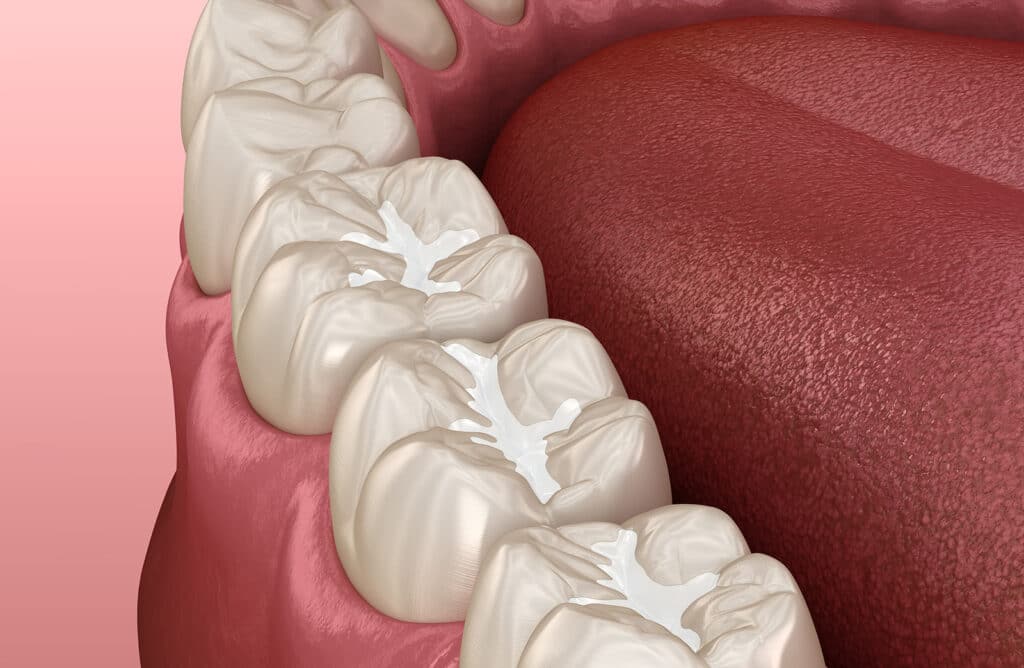
Dental fillings are restorative materials dentists use to treat cavities and protect the tooth from further damage. As a part of our restorative dentistry program, Woodall & McNeill offers high-quality dental fillings in Raleigh, NC. These fillings are affordable, effective, and can last for many years.
What Are Dental Fillings?
Dental fillings are used to restore or repair teeth. They can be made of glass, metals, porcelain, amalgam, or a combination. The most common application of fillings is to “fill” cavities—parts of the tooth destroyed by decay. Additionally, they repair chipped, cracked, or weakened teeth caused by nail-biting and teeth-grinding practices.
Composite resin is the substance most frequently used for dental fillings. It’s a material that resembles teeth and is made of glass and plastic. These tooth-colored dental fillings became popular because they look natural and aesthetically pleasing.
Cost of Dental Fillings
The type of material used determines how much the cost of dental fillings will be. Most insurance will probably cover the cost if you opt for tooth-colored fillings. If you choose a different filling material, you may be responsible for any difference in cost not covered by your plan.
What Happens in a Dental Filling Treatment?
Woodall & McNeill offers dental fillings in Raleigh, NC, to help patients with cavities and prevent them from worsening. A dental filling treatment involves cleaning and removing the decayed portion of your tooth. After drying your tooth, our dentist will apply a strong bonding agent to the cavity’s surface and use tooth-colored dental fillings to fill the hole. After that, the composite resin will fully bond to the tooth with the help of a blue wave curing light.
Advantages of Tooth Colored-Fillings
Among all types of dental fillings, composite resins or tooth-colored fillings are the most popular choice for patients because of the following reasons:
- Cosmetic Appeal: Tooth-colored fillings look natural. People won’t notice them because they resemble your teeth.
- Metal-free: Metal fillings can harm your oral health and general well-being, even if they are incredibly durable. They are also noticeable, unlike composite resins.
- Quick Procedure: It takes less than an hour to place this type of filling in your teeth.
- Healthy Tooth: With tooth-colored fillings, you can preserve the healthy structure of your teeth.
- Durable: Tooth-colored fillings can endure for over ten years with proper oral hygiene.
Restore Your Teeth with Confidence
If you have cavities, cracked teeth, or lost an old filling, see your dentist at Woodall & McNeill immediately. We provide premium dental fillings in Raleigh, NC, that completely match your tooth’s natural color and texture.
Call our office today for dental fillings or learn more about our other dental treatments!
Frequently Asked Questions about Dental Fillings in Raleigh, NC
Where can I get a dental filling in Raleigh, NC?
Woodall & McNeill Dentistry provides tooth-colored composite dental fillings in Raleigh, NC, at 2020 Fairview Rd in the Five Points area near downtown. Dr. Dean Woodall and Dr. John McNeill treat cavities, cracked teeth, and worn fillings for patients across Wake County. Most fillings are completed in a single visit. To book, call (919) 821-2595 or request an appointment.
Are silver amalgam fillings safe, or should I replace them with tooth-colored ones?
Existing silver amalgam fillings are considered safe by the ADA, FDA, and World Health Organization and do not need to be replaced unless they are cracked, worn, leaking, or causing decay underneath. The mercury in amalgam is bound within the alloy and released only in trace amounts, which is why removing intact fillings for health reasons alone is not recommended — the removal process itself briefly exposes you to more mercury than leaving them in place. Replacement makes sense when the filling has actually failed, when there’s new decay, or when a patient wants the aesthetic upgrade. That said, most modern dental practices, including Woodall & McNeill, place tooth-colored composite fillings by default for new cavities.
Does getting a filling hurt?
The procedure itself is not painful. Local anesthetic numbs the tooth and surrounding gum before any drilling starts, so most patients feel only pressure and vibration, not pain, during the filling. The one moment some people notice is the numbing injection itself, which is brief and can be minimized with topical numbing gel beforehand. After the anesthetic wears off, mild soreness at the injection site is normal for a few hours. Patients with dental anxiety can ask about nitrous oxide sedation to stay relaxed during the appointment.
How long does it take to get a filling?
A single filling typically takes 20 to 60 minutes from start to finish, including numbing time. Small cavities on a single surface of one tooth are on the shorter end; larger cavities, cavities on multiple surfaces, or teeth in hard-to-reach spots take longer. Multiple fillings can often be done in the same visit if they’re in the same area of the mouth (numbing one quadrant covers everything in that zone). Fillings on opposite sides of the mouth are usually split across two appointments so you’re not left with your whole mouth numb at once.
Why does my tooth hurt or feel sensitive after getting a filling?
Some sensitivity to cold, biting pressure, or air for a few days to two weeks after a filling is normal — the tooth needs time to settle after being drilled and restored, especially with a deeper cavity. If sensitivity is sharp when you bite down, the filling may just be a touch too tall and needs a quick five-minute adjustment (a very common fix). If discomfort lingers beyond two weeks, gets worse instead of better, or you develop throbbing or spontaneous pain, call the office — that can signal a bite issue, an irritated nerve, or in rare cases a cavity that was deeper than it appeared and needs a root canal. Call (919) 821-2595 if it’s not settling.
How soon can I eat or drink after a filling?
With a modern composite (tooth-colored) filling, you can eat and drink as soon as you leave the office because the filling is fully hardened by the curing light before you get up from the chair. The main thing to wait out is the numbness — usually two to four hours — because you can bite your cheek, tongue, or lip without realizing it. Once feeling returns, favor softer foods for the first day if the tooth is tender, and avoid very hot, very cold, or extremely hard foods on that tooth for 24 hours. Silver amalgam fillings (rarely used today) require a longer 24-hour wait for full hardening.
Do I need a filling or a root canal?
A filling is enough when the decay or damage is limited to the outer layers of the tooth (enamel and dentin). A root canal becomes necessary when the decay, crack, or trauma has reached the pulp — the nerve and blood vessels inside the tooth — or when the pulp is infected. Signs pointing toward a root canal instead of a filling include lingering pain after hot or cold (rather than pain that fades within seconds), spontaneous throbbing, pain when biting, swelling near the tooth, or a small pimple on the gum. Only an exam and X-ray can confirm which one is needed; don’t guess, because delaying can turn a filling into a root canal or worse.
How long do tooth-colored fillings actually last?
Tooth-colored composite fillings typically last 7 to 10 years, with some going 15 years or more when placed in low-stress areas and cared for well. What shortens that range: grinding or clenching, chewing ice or hard candy, poor brushing and flossing that lets decay start under or around the edge, and very large fillings (which stress the surrounding tooth). What extends it: consistent home care, wearing a night guard if you grind, avoiding sugary drinks and constant snacking, and keeping up with routine cleanings and exams so small issues are caught before they undermine the filling.
How can I tell if I need a filling if my tooth doesn't hurt?
Most cavities are painless in their early stages, which is exactly why routine dental visits matter — dentists catch them on X-rays and exams before symptoms appear. Signs you might notice yourself include a visible dark spot or hole in a tooth, food catching in the same spot repeatedly, floss shredding in one area, sensitivity to sweet foods or cold that lingers a few seconds, or a rough edge you feel with your tongue. By the time a cavity actually hurts, it’s usually already deep, so waiting for pain is not a reliable strategy. If you’ve gone more than a year without a checkup, book one — call (919) 821-2595.
Can a filling fall out, and what should I do if it does?
Yes, fillings can fall out — usually because of new decay around the edges, a crack in the tooth, biting something hard, or simple wear over time. If a filling comes out, save it if you can, avoid chewing on that side, and keep the area clean by brushing gently and rinsing with warm salt water. Don’t try to glue it back with household adhesives. Call the dentist to be seen within a few days; the exposed tooth is more vulnerable to decay and sensitivity the longer it sits open. If you’re in pain or the tooth has sharp edges cutting your tongue, call (919) 821-2595 the same day.